


by Brett Walsh
In August 2020 The British Library launches a podcast series called ‘William Wordsworth: From This Green Earth’ which celebrates the 250th anniversary of the birth of the poet. All six episodes are available on the Library’s English and Drama Blog, alongside digitized items picked out of the collection on Romanticism.
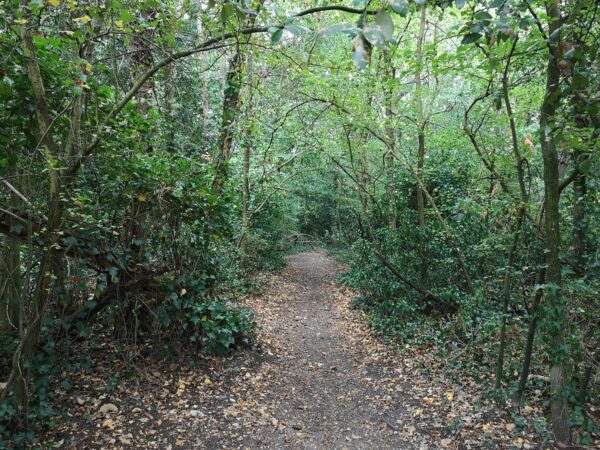
I developed and presented the series which takes listeners on a journey into the natural world: along rivers, through forests and into the heart of London as it explores what nature meant to William Wordsworth, and what it means to us now. Featuring extraordinary speakers in locations ranging from Cumbria to Delhi’s Ridge Forest, the series includes eco-pop from singer Jade Cuttle, and recordings from the Library’s Wildlife collections, along with contributions from the Young Poets Network and Lord Melvyn Bragg, who gives readings of his favourite poems.
I work in the Cultural Events team of the British Library, where earlier this year we began preparing a celebration event for the anniversary. I was no great aficionado of the poet, but like many, I encountered his work as a child, and something of that encounter must have stayed with me. Then in March this celebration, like the majority of our events programme, was cancelled as we were plunged into the tumult and stasis of lockdown.
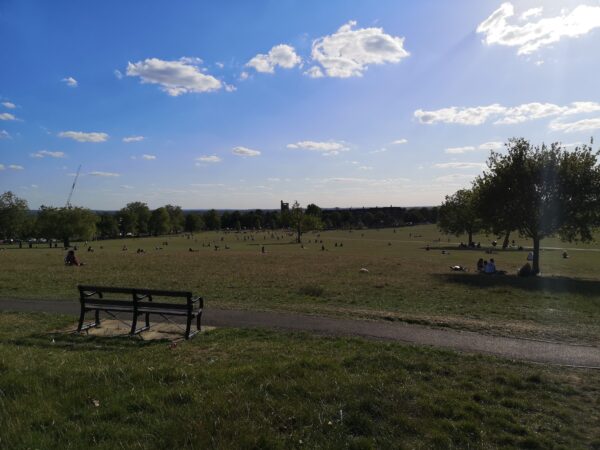
Deflated and not a little reflective I thought about the cancelled event when, in the early weeks of self-isolation, I took refuge in my small, untidy South London garden, or took reviving walks to the local common, crisscrossing pavements to avoid other pedestrians. I searched out Wordsworth’s poems and found a little solace in practising a sort of poetic appreciation on my wanderings, stopping occasionally to take in a tree, circling like a matador to note its details, or marvelling at the spring’s seemingly effortless profusions.
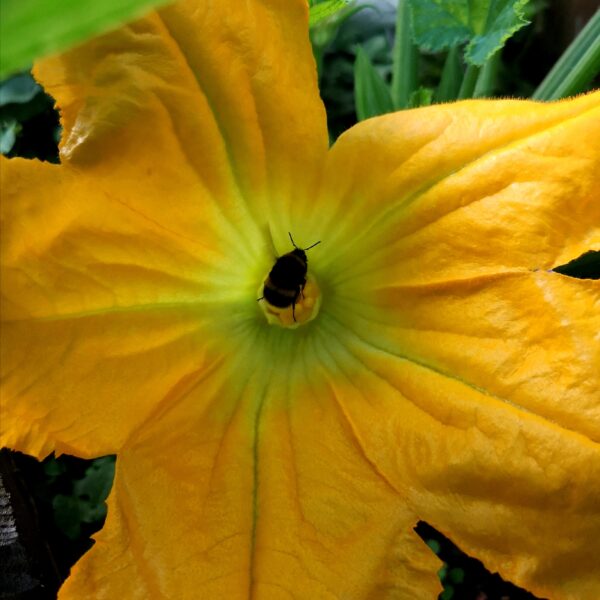
It struck me then that Wordsworth was a vital voice for this strange world we found ourselves in. A guide for this time of reflection and anxiety, where the boundaries of many lives had contracted suddenly, where the solace of those small but pervasive things, the details of nature and the subtle inflections of our own inner worlds, had been forced into sharp focus. Reflection had become unavoidable. We were all adrift in uncertainty, yet remained physically penned in. It was in this predicament that the natural world announced itself, as a therapeutic resource, a place of refuge and possibility, somehow beyond the strains of lockdown.
I have always communed with the natural world in what I felt was my own peculiar way. Childhood holidays to a converted shepherd’s hut in the Conwy Valley, North Wales had me washing daily in the nearby river, watching my family as distant figures on the hillside, moving beneath the solitary plume of chimney smoke as the clear water lapped my little legs and the pebbles of the river bed stung my feet. Over the holidays I grew less and less bashful, less shyly devoted to the screen of rushes and grasses and more at ease in my undress on the mountainside, standing before the parliament of inquisitive sheep that looked on and occasionally bleated.
These memories and a renewed sense of the impressions that must have enveloped me at the time, were teased out by my newfound relationship with Wordsworth, they returned to me through Wordsworth, whose poems provided a calming resources for nostalgia, a reminder of the profound things hidden in the commonplace. Perhaps not hidden but just unheeded. The more I reflected, the more I uncovered, and all the more closely related my nature and the natural world seemed.
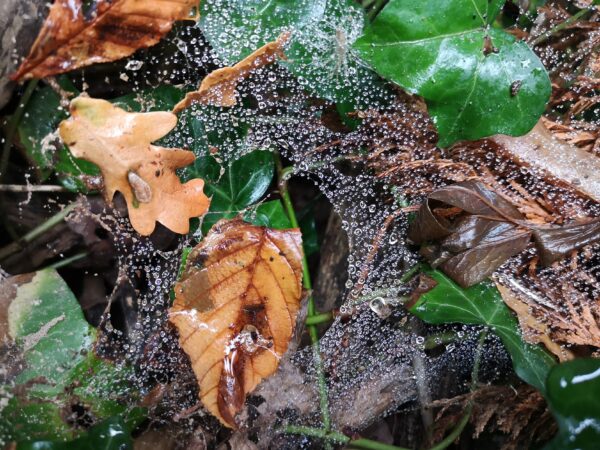
Growing up I was immersed in nature. I used to roam unsupervised from my house, which backed onto a disused railway track, long-abandoned by the steam trains and reserved instead for wildlife. A green passage through the semi-industrial town, a phantom of old industry and transport, now quiet and unkempt, regained by the contained wilderness of a small town, creeping up through the cracks. It had Victorian bridges in dark brick and deep platforms that were filled with water and had bloomed into algae-carpeted ponds. Its sloping banks were overtaken by shrubs and rare caterpillars. It was only a modest wilderness but as a child it seemed boundless, its aspects inexhaustible.
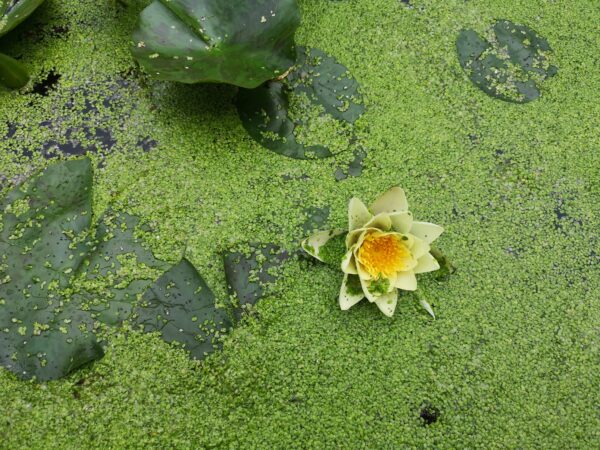
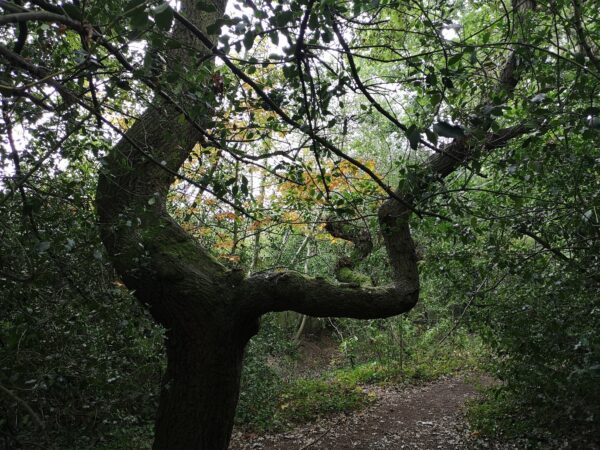
I was unspeakably fond of the wordlessness of that place and spent days and weeks, exploring the landscape of my imagination through the landscape itself. Scrambling up trees and through thickets of brambles, avoiding moats of nettles, inadvertently starting monk jack deer in the process and feeling akin to them in my heightened listening and panting shock, as they leapt off into obscure woodland. Muttering away to myself, just like Wordsworth, not really in dialogue but not really alone. Without knowing it, I shared the kind of education that Wordsworth had, immersed in the natural world with the easy cavorting instincts of early adolescence and the deep directness of late childhood. Two tendencies walking hand in hand in exploration, forming a kind of appreciation that is not easily lost, a connection to the land, to place and to feeling that has stayed with me.
Today our view of Wordsworth is sometimes warped by his entrenchment in English Literature curricula and by his image as a ‘biscuit tin’ idol, a cosy old Northern sage. It’s easy to forget that his childhood was riven by trauma, orphaned at a young age and split from his beloved sister Dorothy. It is interesting that it was trauma which took him out of doors and into nature. A trauma that provoked his deep personal bond with the environment, with a kind of wanderlust and with the early solace seeking that features in his great autobiographical poem The Prelude.
Thus, often in those fits of vulgar joy
Which, through all seasons, on a child’s pursuits
Are prompt attendants, ‘mid that giddy bliss
Which, like a tempest, works along the blood
And is forgotten; even then I felt
Gleams like the flashing of a shield; the earth
And common face of Nature spake to me
Rememberable things
The Prelude: Book 1: Childhood and School-time
It was perhaps this need to retreat from pain, to sojourn through a natural world that indifferently contained you, dissolved you in its pantheon of forces, creatures and effects, which I’d noticed when I returned to Wordsworth. When this species of contemplation reappeared in me with a force, as that rich kind of attention that is demanded by restricted circumstance, boredom, stress or panic. When that contemplation came back to me, from the memories of my gallivanting childhood, to soothe the anxious mind, to combat the dizzying onslaught of current affairs, I immediately thought of Wordsworth, not any particular line or poem, but the man.
I envisioned him wandering lone through the hills, buoyed by the rich influx of his sensuous impressions, comforted by the sight of the ecosystem, thriving about him, composing line after line of terse, rhythmic poetry. Propelled by his marching stride (‘a motion and a spirit that impels’) and encapsulating not just the flora and the fauna of his native Cumbria, but also the society he was enmeshed in, all the stirrings of his unbridled passions, all the spectres of his long memory, all the moods of his melancholy youth and those who drew his empathy, the characters he met on his journeys, fellow wanderers or those whose lives were bound to the earth. He was attuned to the voices of the overlooked. In nature as in culture, he chose to pay attention.
All of this figured in my thinking when I shaped this podcast series on Wordsworth, his legacy and his view of nature. Through six episodes which coalesced around six themes, I’ve tried to unfold Wordsworth’s influence and what it means for us in this juncture, at this time of crisis. On this audio voyage into all things Wordsworthian, I’ve spoken with artists, writers, poets and others, to explore the vital parts that family, friendship and collaboration played, leading to some of the most resonant and lasting lines of English poetry.
I’ve delved into the power and potency that the simple act of walking had for the lake poet, as well as considering the idea of childhood and imagination, that Wordsworth and other Romantics held in such high esteem. In the final episodes I focused on legacy, starting with a personal exploration of his native Cumbria and moving outwards, to consider the international and post-colonial impact of his poetry and personal myth.
Wordsworth has for me, become something of a guiding spirit in these troubled times. We are staring down the pandemic but beyond that the environmental crisis looms. I’d wager that Wordsworth’s feelings on interconnection, equality, and his radical reworking of the pastoral tradition, his boldness of subject, his clear language that works on the world and resides in memory, all this will be more valuable and more necessary, as we are forced to rethink hundreds of years of industrialization and plunder of natural resource. Wordsworth seems to be a voice from the start of a process that is now drawing to a close.
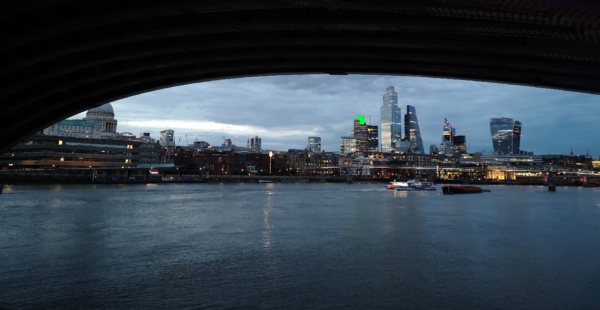
For me this all came to consciousness one evening when I cycled across the Thames. I’d been running some errands in North London and had taken shelter from the summer storms, under the arches of Blackfriars Station overhanging the water. With the screech of trains above and the citadels of Canary Wharf lit up in the distance, I watched the rains pass and the calm evening return. Then Wordsworth’s line sounded in my mind: ‘All bright and glittering in the smokeless air’
And I was compelled up to Westminster Bridge. Locking my bike I walked along the bank and up the steps, stopping at intervals trying to piece together in my mind Wordsworth’s 1802 poem ‘Composed Upon Westminster Bridge…’
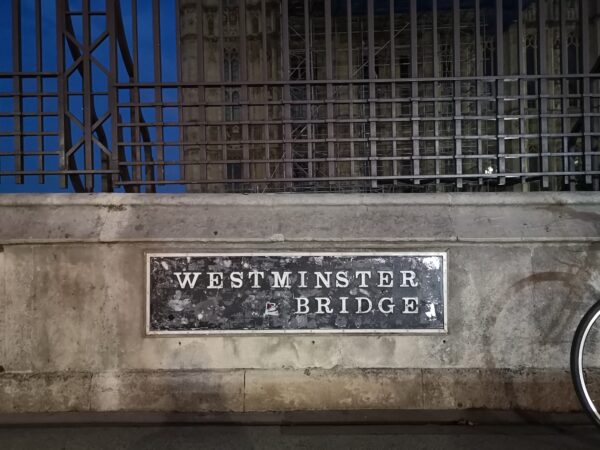
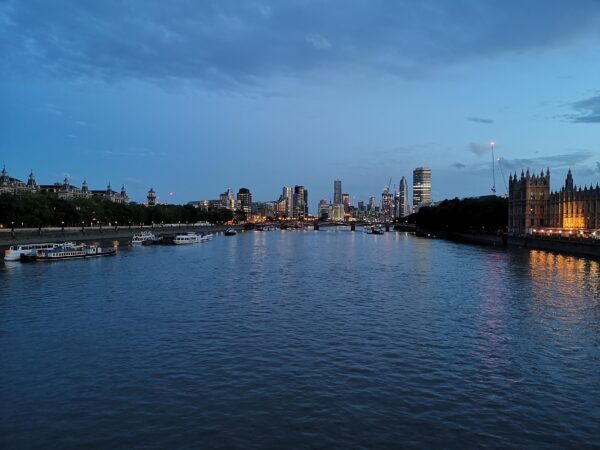
It was around eleven at night and the streets were empty, emptied of people but full of sensation. The petrichor scent rising from the pavement, the slow lapping tide against mossy stone parapets. I stood on an outcrop and read the poem a few times over:
Earth has not any thing to show more fair:
Dull would he be of soul who could pass by
A sight so touching in its majesty …
The voice of the poet was louder then because the city was quiet, and though over two hundred years separated us, I felt Wordsworth there beside me on the bridge and we watched the river glide into the night.
The series was inspired by the Library’s recent exhibition entitled ‘William Wordsworth: The Poetry of Place’ which told the story of Wordsworth’s life and explores the role place played in his poetry.
Brett Walsh coordinates the cultural events programme at the British Library. He is a writer and artist who previously studied at the Royal College of Art, London. His writing was published in an anthology of essays on collective action, entitled Meet Me In The Present: Documents and their Afterlives. He also edits the literature and arts magazine Ossian, which publishes essays, fiction and journalism.


