


by Annabel Barry
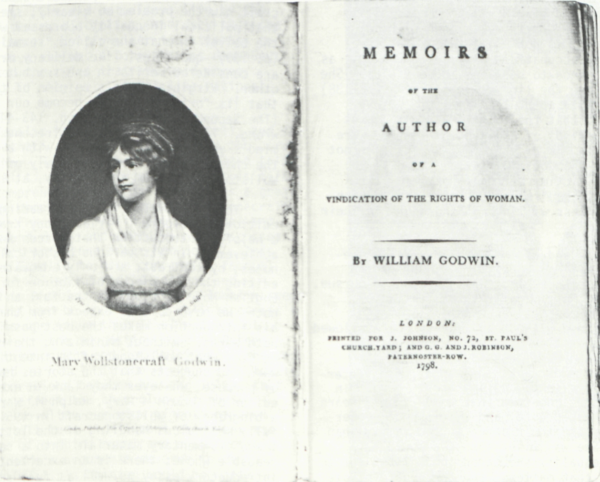
In the Carl H. Pforzheimer Collection in the New York Public Library is a private memoir, inconspicuously bound and hand-written in a neat, open cursive, which has not previously attracted scholarly interest. The Reverend George Wray of Leeds wrote his Memoirs of a most beloved and affectionate wife in 1817, on the occasion of the death in childbirth of his wife, Caroline. On seventy recto pages, supplemented by additional notes on several versos, Wray chronicles his wife’s life and demise, interspersing his eulogy with scriptural wisdom. One of the most curious aspects of the manuscript is a yellow paper insert containing a lock of the author’s own blond hair, an uncannily tactile reminder of the Biblical verse with which he concludes his account: ‘The very hairs of your head are all numbered’ (Matthew 10:30). Neither George nor Caroline Wray were historically significant figures. Yet this unknown record of private grief sheds new light, by comparison, upon a controversial public work: William Godwin’s Memoirs of the Author of a Vindication of the Rights of Woman (1798), published one year after his own wife, Mary Wollstonecraft, died giving birth to Mary Shelley, of Frankenstein fame.

The inscription of Wray’s Memoirs and a lock of her hair, The Carl H. Pforzheimer Collection of Shelley and His Circle, The New York Public Library, Astor, Lenox and Tilden Foundations
The story of Godwin’s Memoirs is well-known. Wollstonecraft’s literary and philosophical writings on women’s rights and education, including A Vindication of the Rights of Woman (1792) were widely read and admired at the time of her death. Her husband’s unsparing memoir and posthumous publication of her personal correspondence revealed the sordid details of her infatuation with Swiss painter Henry Fuseli and her affair with American businessman Gilbert Imlay, including her out of wedlock child and multiple suicide attempts. The Memoirs provoked a moral outcry, turning even Wollstonecraft’s most ardent supporters against her. This is clear from a manuscript letter in the Abinger Papers in the Bodleian Library, received by Godwin on January 26, 1799. The anonymous author, who calls herself ‘R.W.’, writes:
Having read a Book entitled the Life [of] Mary Woolstonecraft [sic] Godwin being completed by her Husband, I perused it with avidity, the beging [sic] I [was] exceedingly gratified with, but [I] felt hurt when I arrived at the place where all Woes commenced, a Woman of her exalted mind forgets herself, every tongue is ready to condemn who can be Silent, not her own Sex . . .Her Interlectual [sic] strength was superior to most either Male or Female, Who can possibly vindicate this Counduct [sic], not a Woman
R.W.’s letter attests to the pain Godwin’s revelations caused certain of Wollstonecraft’s female readers, who had seen her as an example. Against the backdrop of this scandal, Wollstonecraft’s writings faded into obscurity until their reclamation by feminists more than a century later.
The illness to which Wollstonecraft, and most likely Caroline Wray, succumbed was puerperal, or ‘childbed’ fever. It was characterized by intense shivering, a rapid pulse, and a high temperature, beginning hours or days after delivery. Unbeknownst to practitioners at the time, it was caused by bacterial infection of the genital tract. The disease was epidemic in the eighteenth and nineteenth centuries, accounting for roughly half of maternal deaths.
Across her works, Wollstonecraft questioned the cultural equation of feverishness with the moral and physical deficiency of women. In John Milton’s Paradise Lost (1667), the archangel Michael shows Adam the veritable fever hospital that is postlapsarian existence:
Immediately a place
Before his eyes appear’d, sad, noisesome, dark;
A lazar-house it seem’d; wherein were laid
Numbers of all diseased, all maladies
Of ghastly spasm or racking torture, qualms
Of heart-sick agony, all feverous kinds (XI.477-82).
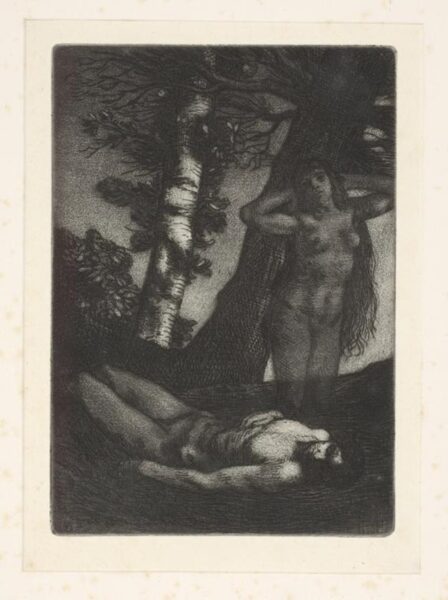
The Creation of Eve by William Strange for John Milton’s Paradise Lost, 1896, New York Public Library
Michael attributes these ‘Diseases dire’ to ‘th’inabstinance of Eve’, her sexually coded transgression that introduced death into the world. Milton, the lover of wordplay, could not have missed Eve’s name at the centre of ‘fever’. The oblique pun bears marks of intentionality: the formulation ‘of Eve’ contains the first four letters of ‘fever’, and the word ‘feverous’ in line 482 refuses to relinquish its central ‘eve’ to become ‘fev’rous’, which would fit the pentameter. This conflation of Eve and f(Eve)r in this passage is indicative of a prevailing societal attitude, continuing throughout the eighteenth and nineteenth centuries, that women were more susceptible to fever because of their physical, emotional, and moral instability. For example, American physician Seth Pancoast included the same passage, without commentary, as an epigraph to his book of gynaecological case studies, The Ladies Medical Guide (1865).
Milton portrays the curse of Eve as one written self-evidently on the bodies of the suffering and implies divine authority for his representation, but Wollstonecraft was among the first to point out that Paradise Lost is in fact a cultural text, one of many through which differences in the embodied experiences of men and women are falsely constructed as ‘natural’. In Vindication, she takes issue with Adam’s lashing out at Eve, after the fall, as a ‘fair defect/Of Nature’, rejecting a theology that would attach guilt to disease. As for the widespread assumption that women were more susceptible to disease, she argues that ‘False notions of beauty and delicacy stop the growth of [women’s] limbs and produce a sickly soreness’ (192). In other words, women’s bodies are not inherently defective; they frequently become disordered because of unequal societal treatment.
Yet Wollstonecraft’s lived experience of fever would complicate her deconstruction of fever’s cultural gendering. While her philosophy dreamed of an escape from the female body, she died a distinctively female death, leaving her body of work unfinished. The irony was seized upon by her enemies and has become a lasting problem for her advocates. One of her most virulent contemporary detractors, Richard Polwhele, wrote in the notes to his anti-feminist poem The Unsex’d Females (1798) that ‘she died a death that strongly marked the distinction of the sexes, by pointing out the destiny of women, and the diseases to which they are liable’ (30n). In retelling the story of Wollstonecraft’s death from a feminist historical perspective, Vivien Jones had to grapple with the fact that Wollstonecraft’s ‘particularly gendered death seems to defy so cruelly some of the most fundamental tenets of Wollstonecraft’s own feminism’.
 A striking similarity between the two memoirs is the detail with which they render the devastating arc of puerperal infection. In Wollstonecraft’s case, the precipitating incident was a complication in the delivery of the placenta, necessitating manual removal. In the hours after this procedure, Godwin writes, ‘The loss of blood was considerable, and produced an almost uninterrupted series of fainting fits’. Although Wollstonecraft initially appeared to recover, she was overtaken by shivering several days later: ‘Every muscle of the body trembled, the teeth chattered, and the bed shook under her.’ Professional physicians tried a series of desperate cures. They ordered that Wollstonecraft be supplied with as much wine as she could drink and, fearing that breastfeeding would contagiously pass on the infection onto her new-born, ‘procured puppies to draw off the milk’. Despite these interventions, by her final two days of her life, Godwin laments, ‘her faculties were in too decayed a state, to be able to follow any train of ideas with force or any accuracy of connection’. His comments tragically connect the feverish dissolution of his wife’s body with the final decomposition of her rational mind.
Wray also provides a medically detailed account of his wife’s disease, which progressed over a two-week period following the delivery. As he catalogues Caroline’s symptoms, he charts her fever’s periodicity through the oscillations of her pulse. Caroline’s body is subjected to indignities in the name of medicine: she is bled and leeched, her hair is shorn, and her head is dunked in cold water. Cynthia Richards argues that Godwin’s decision not to suppress the intimate details of Wollstonecraft’s bodily treatment allows the Memoirs to serve as ‘a rare late eighteenth-century account of death that allows no consoling distance or denial of the subject’s loss’ . Yet the similarities between Godwin’s memoir and Wray’s indicates that the former may not be so uncommon in its approach after all. This suggests a need to reconsider assumptions about how people in the eighteenth-century engaged with pain, mortality, and grief.
In comparison with Godwin, Wray describes his wife in terms seemingly more appropriate for a Romantic-era eulogy of a woman. He praises his wife for her conventional femininity, writing that ‘Her domestic arrangements were admirable. No house could be better regulated — No family more uniform’. A counterpoint to Godwin’s (inadvertently) monstrous image of Wollstonecraft nursing puppies is Wray’s description of Caroline before the onset of her fever, with her son ‘nestling at her breast’. He writes, ‘As her Sweet Baby lay in her bosom — she pointed to it with extreme pleasure. — Her wish to be able to nurse had always been strong’. To Wray, Caroline’s desire and ability to nurse validates her well-ordered maternal instincts, counteracting the negative implications of her diseased reproductive system.
Unsurprisingly given his profession, Wray’s recollection of Caroline’s final hours reflects his deep religiosity:
As she lay more composed — she said with a most uncommon expression — ‘My Love! How beautiful! — Providence all around’! — and in the same instant as she spoke, her whole countenance changed & became illuminated. — the light which overspread her face gave me an idea of glory. — It was momentary — but it surpassed any thing which the mind can conceive. — Every feature was affected by it. — —
This account is noticeably different from Godwin’s report that Wollstonecraft’s ‘religion . . . was not calculated to be the torment of a sick bed; and, in fact, during her whole illness, not one word of a religious cast fell from her lips’ (190). Godwin, a principled atheist, meant this as a compliment, but Polwhele gleefully latched onto this detail, writing in his notes to The Unsex’d Females, ‘I cannot but think, that the Hand of Providence is visible, in her life, and in the Memoirs themselves . . . that the fallacy of her doctrines and the effects of an irreligious conduct, might be manifested to the world’. Wray lovingly discerns the light of Providence in his wife’s peaceful transformation on her deathbed, while Polwhele cruelly reads providential punishment in Wollstonecraft’s painful final hours, put on public display. Wray’s account exemplifies the decorum that Romantic-era British society would expect to find in a memoir of a wife and mother. Against this example, Godwin’s departure is especially obvious.
 The biggest difference between the two memoirs lies in their purpose. Wray’s document is intended for private consumption. In dedicating the volume to his son, Wray apologizes, ‘Many things, of small importance to yourself, are dilated on & drawn out to a needless length. This is particularly applicable to her illness. But I had a feeling of my own to gratify, & as the story is between ourselves, a Child may well forgive such weakness in his Father’. For Wray, it is the very status of the text as a private ‘story . . . between ourselves’ that permits him to give such a long and thorough account of his wife’s fever. By contrast, Godwin writes that he aims ‘to give to the public some account of the life of a person of eminent merit deceased’. Godwin was motivated to create an honest and accurate public memorial of his wife, in keeping with what would be written about a man of a similar stature. As the reception of his Memoirs shows, he was ahead of his time, and the gender politics of the era frustrated his good intentions.
Comparing Godwin’s Memoirs with another Romantic-era memoir by a husband grieving his wife’s death of puerperal fever illuminates the ways in which Godwin’s work was conventional, and the ways in which it was radical. Despite their religious and ideological differences, both men described the physical body in unflinching terms, refusing to disguise the mechanisms of mortality. While a memoir closer in sensibility to Wray’s might have been better received by the public at the time, it would not have been as true to Wollstonecraft’s character, accomplishments, and contributions. The current pandemic has affected men and women unequally. School closures and working from home are exposing gendered assumptions about who ought to raise and educate children and how domestic labour ought to be divided. From Wray’s praise for domestic femininity to the feverish reception of Godwin’s straightforward biography, these two memoirs finally demonstrate what Wollstonecraft already knew: that illness, far from being a simple fact of the body, is always transmuted through a cultural lens.
Works cited
Godwin, William. Memoirs of the Author of a Vindication of the Rights of Woman. London: J.
Johnson, 1798.
Jones, Vivien. ‘The death of Mary Wollstonecraft’. Journal for Eighteenth-Century Studies, 20,
no. 2 (2008), 187-205.
A Lancashire Woman/R.W. ‘Letter to William Godwin’. 26 January 1799. Dep.b.214/3 Abinger
Papers, Department of Special Collections and Western Manuscripts, Bodleian Library, Oxford University.
Loudon, Irvine. The Tragedy of Childbed Fever. Oxford: Oxford University Press, 2000
Milton, John. Paradise Lost: A New Edition, 2 vols. Edinburgh: [1667] 1807.
Pancoast, Seth. The Ladies’ Medical Guide. Philadelphia: John E. Potter, 1865.
Polwhele, Richard. The Unsex’d Females: a poem. London: Cadell and Davies, 1798.
Richards, Cynthia. ‘The Body of Her Work: The Work of Her Body: Accounting for the Life
and Death of Mary Wollstonecraft’, Eighteenth-Century Fiction 21, no.4 (2009): 565-592.
Wollstonecraft, Mary. A Vindication of the Rights of Woman and A Vindication of the Rights of
Men. Ed. Janet Todd. Oxford: Oxford University Press, [1792] 2008.
Wray, George. Memoirs of a most beloved and affectionate wife. Pforz BND-MSS, Carl H.
Pforzheimer Collection of Shelley and His Circle, New York Public Library, New York, NY.
Annabel Barry received her MA from University College Dublin and a BA from Princeton University, where her thesis focused on fever as a gendered metaphor, material reality, and formal device in the works of John Keats and Mary Wollstonecraft. Her article “‘—My Brother Tom is Much Improved—’: The Suffering Body at the Ends of Keats’s Letters and Poems” was recently published in The Keats-Shelley Review.


