


Caring for a living building
A fresh coat for Dove Cottage
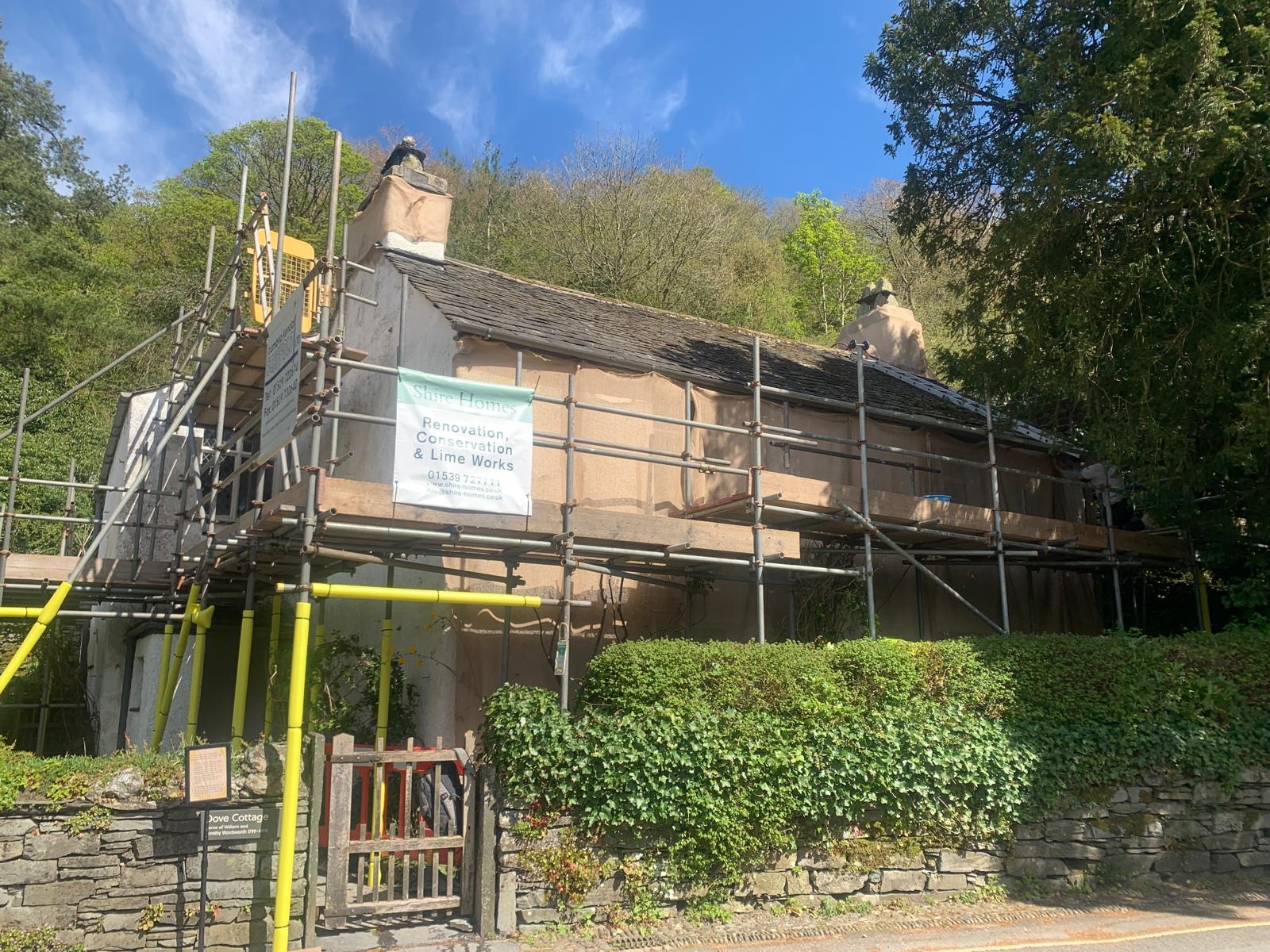
If you’re visiting Dove Cottage this spring, you’ll notice something a little unusual: scaffolding wrapped around the house. This is part of an essential – and rather historic – process.
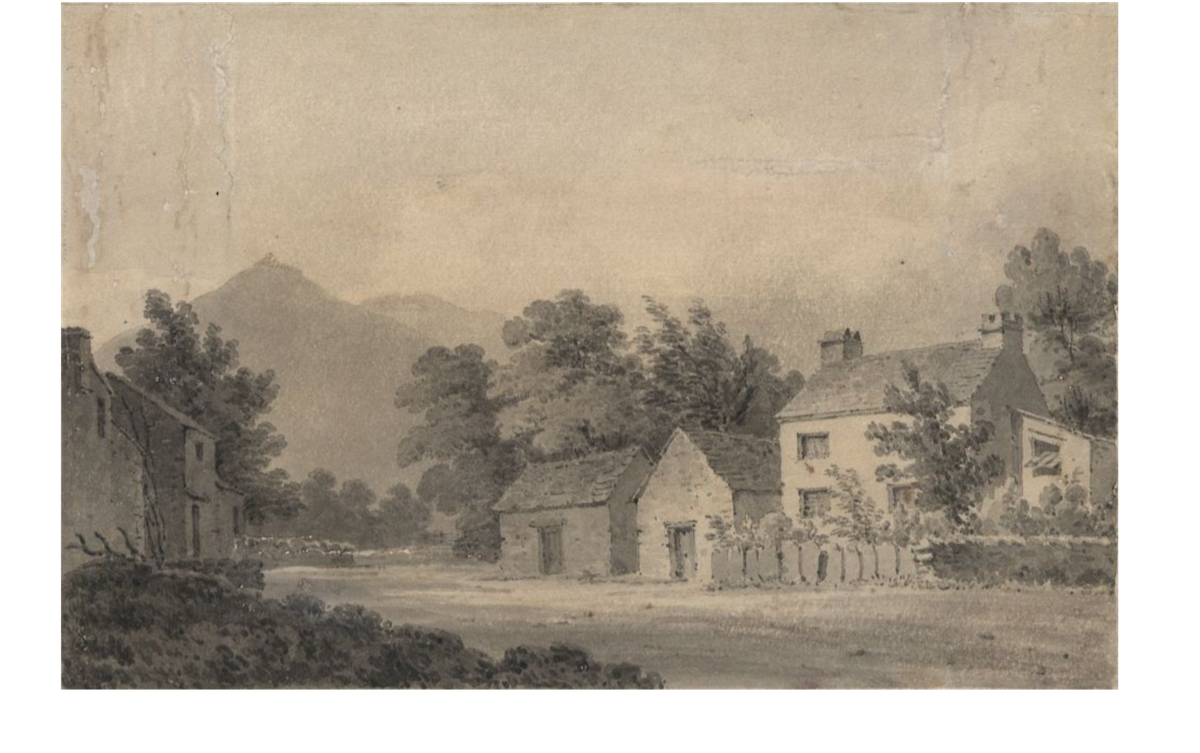
We’re currently reapplying limewash to the exterior walls of the cottage. Limewash is a traditional coating that has been used for centuries on buildings like this one. Unlike modern paints, it allows the walls to “breathe,” letting moisture escape and helping to prevent damp. In a building as old and well-loved as Dove Cottage, that’s vital.
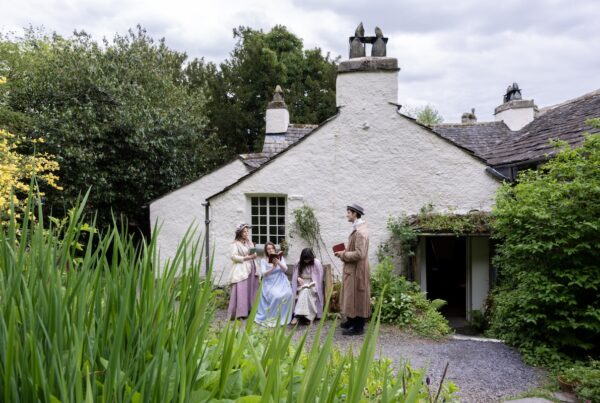
This isn’t just maintenance – it’s a continuation of the cottage’s original appearance and care. When William and Dorothy Wordsworth lived here, the house would have been finished in much the same way. Around 1800, its roughcast walls were coated in limewash, giving the cottage its characteristic pale colour. Thomas De Quincey later described his first sight of it as “a white cottage, with two yew-trees breaking the glare of its white walls.”
That bright finish may also have served a practical purpose. Wordsworth’s poem ‘Benjamin the Waggoner’ is the source for the tradition that the house served as an alehouse (the Dove and Olive Bough) at some point prior to 1799. Further evidence exists in a record of a license for an alehouse named the ‘Dove’ in Grasmere in 1791. It is possible that the name ‘Dove’ could be linked to the exterior colour which helped to make the cottage easily visible on the road through Grasmere.
For at the bottom of the brow,
Where once the Dove and Olive-bough
Offered a greeting of good ale
To all who entered Grasmere Vale;
And called on him who must depart
To leave it with a jovial heart;
There, where the Dove and Olive-bough
Once hung, a Poet harbours now,
A simple water-drinking Bard;
In her journal in June 1802, Dorothy Wordsworth notes times spent whitewashing indoors – reminding us that this kind of care was once part of everyday life.
‘Wm had not fallen asleep till after 3 o’clock but he slept tolerably. Miss Simpson came to colour the Rooms. I began with white-washing the ceiling. I worked with them (William was very busy) till dinner time but after dinner I went to bed & fell asleep.’
Dorothy Wordsworth, Grasmere journal, 25 June 1802.
The timing of this work is no accident. Limewash needs stable weather to cure properly – not too hot, not too cold, and not too wet – making spring the ideal season. It’s a slow, careful process, carried out using traditional methods to protect the fabric of the building.
So, while the scaffolding may change the view for a short time, it also offers a rare glimpse into how historic buildings like Dove Cottage are cared for. In a way, you’re seeing the cottage much as it has always been: not frozen in time, but continually looked after, renewed, and living.




It’s wonderful to see the dedication to preserving Dove Cottage’s authentic appearance—limewash not only honors the Wordsworths’ legacy but also ensures the building remains protected for future generations. Learning about the historical significance of this traditional technique made me appreciate the visit even more. Thanks for sharing these insights!