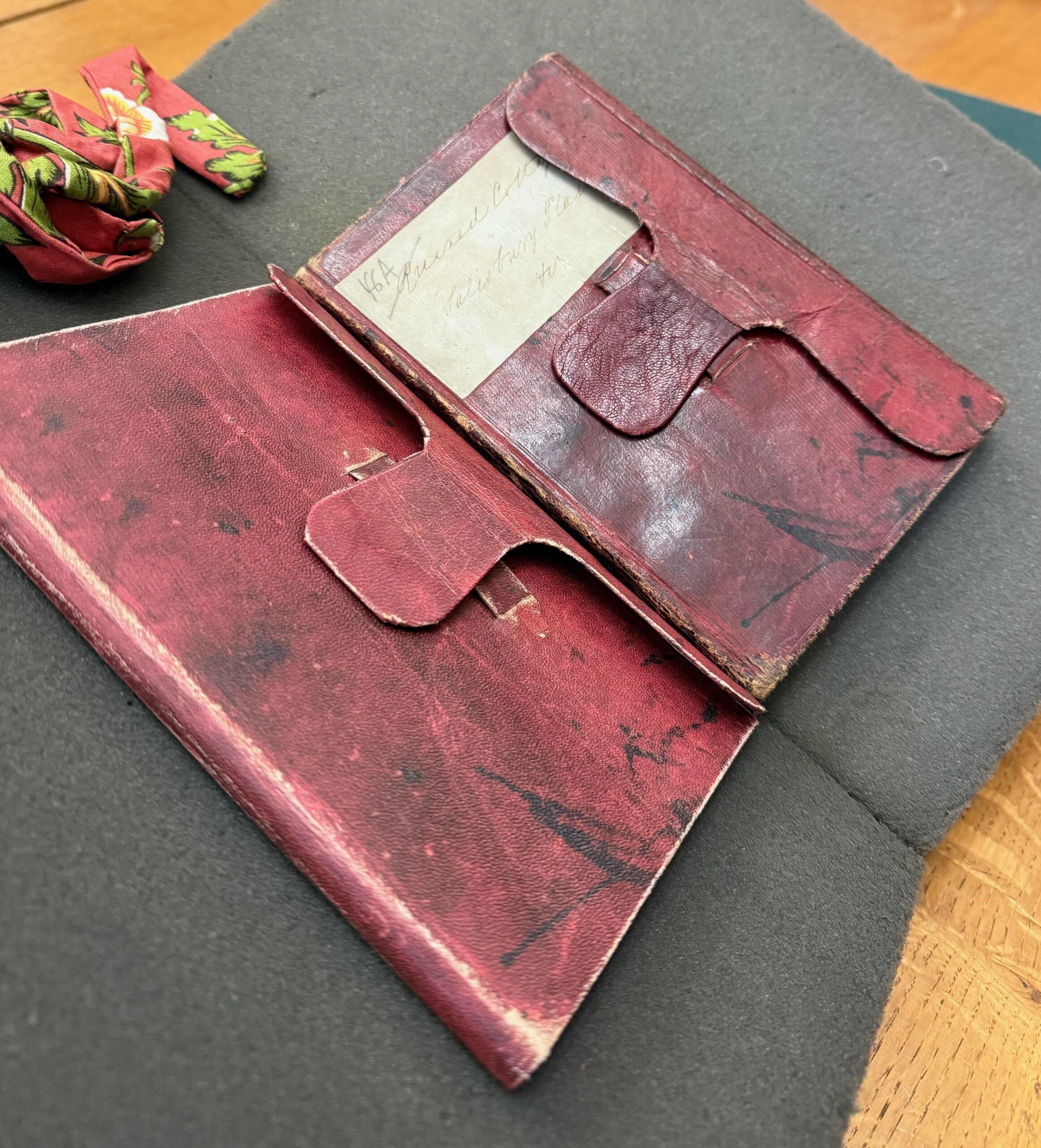
A notebook filled with the handwriting, corrections and conversations of William Wordsworth and his family has been painstakingly recreated, giving readers an unprecedented glimpse into the complex, collaborative process behind some of his most important poetry.
Dove Cottage Manuscript 16 (DCMS16) is an item of great significance within the Wordsworth Trust’s collection. Now, thanks to the scholarship of Dr Ruth Abbott and the generous support of John Armitage, this new two-part publication brings it to life.
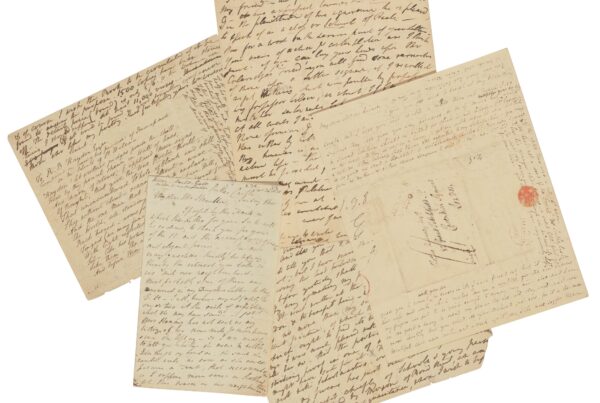
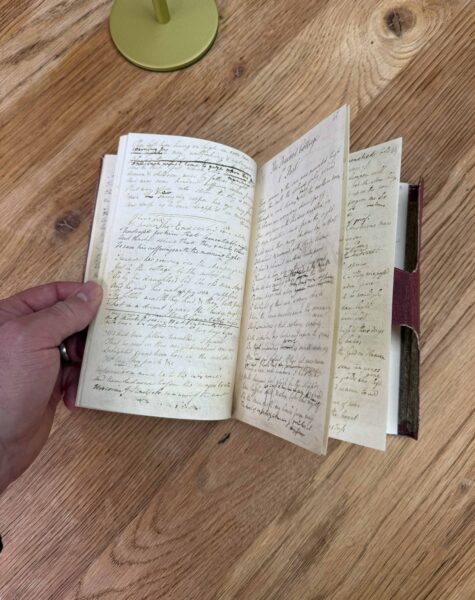
Far from the image of the solitary Romantic poet, the notebook reveals Wordsworth’s writing as a family affair. Different hands, layers of revisions and even mistakes made in conversation remain visible on its pages. The notebook makes it easy to imagine William, Dorothy and Mary Wordsworth reading lines of poetry aloud, suggesting changes, rewriting passages and working together as ideas developed.

“The notebook’s ‘mess’ was not a constraint — it was part of the creative process.”, said Michael McGregor, Director of the Wordsworth Trust, the Cumbria-based attraction which is home to more than 90% of William Wordsworth’s original verse manuscripts, Dorothy Wordsworth’s Grasmere journal, and many more letters and journals written by the family.
DCMS 16 contains early versions and fragments that would eventually find their way into published works from the 1800 Lyrical Ballads to The Prelude, which wasn’t published until after Wordsworth’s death.
The notebook was first used by William and his sister Dorothy during the winter of 1798–99 in Goslar, Germany, and continued to be revisited over more than 40 years. Its pages became a working space where poetry could be copied, rearranged, questioned and reinvented.
“It shows Wordsworth not as a lone genius, but as a poet constantly in conversation with Dorothy, his wife Mary, his earlier self and the world around him, and recreating the notebook has been a similarly collaborative process.” Continued McGregor
The project is a true collaboration. It was conceived and planned by Dr Ruth Abbott of St John’s College, Cambridge, an expert on the Wordsworth family notebooks, who has also edited, transcribed and introduced the work. The edition has been designed by Humphrey Stone, produced by Hurtwood Books (working with Ludlow Bookbinders) and published by the Wordsworth Trust.
Every surface of DCMS 16 has been reproduced from high-resolution photography, then printed in Bulmer (a typeface cut in the 1790s) on historically appropriate paper. The result is designed to feel less like looking at a reproduction and more like holding the Wordsworths’ working notebook itself.
The accompanying volume provides a detailed type facsimile, allowing readers to follow the handwriting, corrections and layers of revision.

For the first time, readers can explore the notebook not simply as an archive of finished poems, but as a record of how poetry was made.
As Dorothy once observed of her brother’s manuscripts, they could be in such a state that they were “almost useless”. DCMS 16 suggests something rather different: that the very disorder of the notebooks was part of what made them creatively valuable.
Wordsworth’s poetry may have survived in print, but this notebook brings the voices, hands and human relationships behind it vividly back to life.
The 𝘞𝘰𝘳𝘥𝘴𝘸𝘰𝘳𝘵𝘩𝘍𝘢𝘮𝘪𝘭𝘺𝘕𝘰𝘵𝘦𝘣𝘰𝘰𝘬 is published as a limited edition of 300 copies, available to purchase from Hurtwood Books for £750 plus P&P. A copy will be on display at the Wordsworth Museum in Grasmere.
To learn more about the works of William Wordsworth and to plan a visit to Wordsworth Grasmere, head to wordsworth.org.uk