


by Chris Townsend
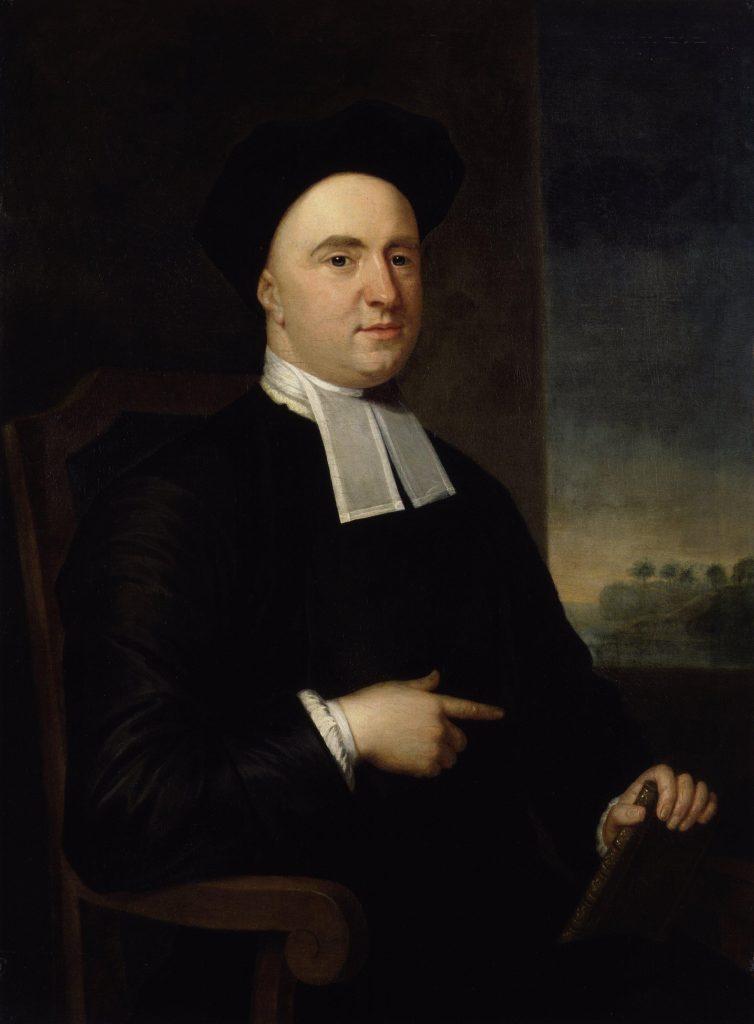
The Irish philosopher George Berkeley was not a contemporary of William Wordsworth — he died in 1753, almost thirty years prior to Wordsworth’s birth — but his philosophical and spiritual thinking still exerts a traceable influence over Wordsworth’s poetry. Wordsworth owned some of Berkeley’s works, and his friend Coleridge even named his second-born son Berkeley during the period that he and Wordsworth were collaborating on the Lyrical Ballads (published 1798). One way in which Berkeley’s ideas end up in Wordsworth’s poetry, though, is through Berkeley’s claim that ‘the proper objects of vision constitute an universal language of the Author of Nature’ (New Theory of Vision, 1709). It is this idea — that natural objects form a kind of spiritual language — that I have been following through Wordsworth’s poetry.
Wordsworth speaks of ‘Nature and the language of the sense’ in his philosophical poem Tintern Abbey. But it is in other poems from the Lyrical Ballads, ’Expostulation and Reply’ and its companion piece ‘The Tables Turned’, that Berkeley’s influence can most be felt. The speaker in the poems eschews book-learning in favour of natural education –- something that, coincidentally, Berkeley also recommends in his last published work, Siris (1744): ‘studious persons also, pent up in narrow holes, breathing bad air, and stooping over their books, are much to be pitied’. This neatly preempts a well-known Wordsworthian imperative: ‘Up! up! my friend, and quit your books / or surely you’ll grow double’.
The central image of ‘Expostulation and Reply’, though, is of the poet’s assertion of the involuntary nature of the senses:
The eye it cannot chuse but see,
We cannot bid the ear be still;
Our bodies feel, where’er they be,
Against, or with our will. (17–20)
In a similar vein, Wordsworth would write in his long poem The Prelude that he ‘cannot chuse but read’ lessons of moral instruction from the ‘book’ that is the natural landscape (VI. 473–475; I have touched on this more in a blog post here). This is a significantly Berkeleian phrase, which carries a strong echo of a passage in Berkeley’s Principles of Human Knowledge on the involuntary nature of perception:
But whatever power I may have over my own thoughts, I find the ideas actually perceived by sense have not a like dependence on my will. When in broad day-light I open my eyes, it is not in my power to choose whether I shall see or no, or to determine what particular objects shall present themselves to my view; and so likewise as to the hearing and other senses, the ideas imprinted on them are not creatures of my will. There is therefore some other will or spirit that produces them.
Berkeley’s words pre-empt Wordsworth’s sixth stanza, in which he speaks of ‘Powers / Which of themselves our minds impress’ (21–22); ‘imprint’ and ‘impress’ are indeed close synonyms, with common roots in the Latin imprimere, and both are linked to publishing, books, and the printing press. For Wordsworth, too, in the companion poem ‘The Tables Turned’, this other ‘power’ is not the ‘spirit breathed’ by books, but the ‘lore of Nature’ (25) –- the spoken, not written, words of a different kind of spirit, one that acts through nature as language. There are echoes, too, of Coleridge’s famous ‘Wedding Guest’ in ‘The Rime of the Ancient Mariner’, who, like the speaker in ‘Expostulation and Reply’, is sat on an ‘old grey stone’ in the Lyrical Ballads, and who also ‘cannot chuse but hear’. The strange invocation of the involuntary nature of empirical experience in the poem sets the scene for its epistemological claims:
Think you, mid all this mighty sum
Of things for ever speaking,
That nothing of itself will come,
But we must still be seeking? (25–28)
This article was adapted from Chris Townsend’s book George Berkeley and Romanticism: Ghostly Language (Oxford University Press, 2022). The article originally appeared as a blog post for Edinburgh University Press. Chris is a Fellow and Teaching Officer at Christ’s College, University of Cambridge, where he works on Romantic poetry. He has also recently written about Wordsworth’s “A Slumber Did My Spirit Seal”, and the tendency for it to be misquoted “steal”, which you can read about here.


